Thinking out loud
Making a case for pair design
Making a case for pair design
Making a case for pair design
A technique borrowed from engineering that changed how I work · Oct 2023
The collab we don't talk about enough
The collab we don't talk about enough
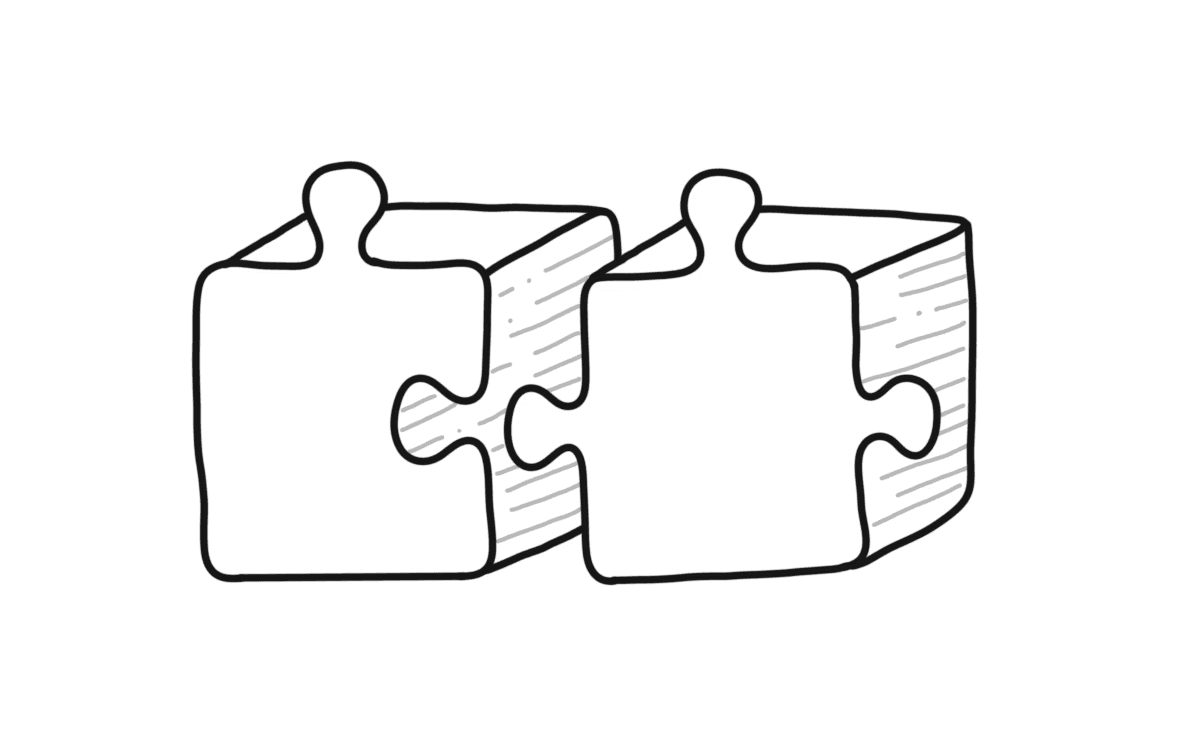
Design has no shortage of collaboration techniques. Critique sessions, co-creation workshops, crazy 8s, card sorting, brainstorming — we're taught these early and use them often. But there's one technique I've found consistently valuable that rarely gets mentioned: pair design.
Borrowed from its older sibling in engineering — pair programming, where two developers share a single workstation, one writing code while the other reviews in real time — pair design applies the same principle to the design process. Two designers, one problem, working through it together in real time.
Design has no shortage of collaboration techniques. Critique sessions, co-creation workshops, crazy 8s, card sorting, brainstorming — we're taught these early and use them often. But there's one technique I've found consistently valuable that rarely gets mentioned: pair design.
Borrowed from its older sibling in engineering — pair programming, where two developers share a single workstation, one writing code while the other reviews in real time — pair design applies the same principle to the design process. Two designers, one problem, working through it together in real time.
How it works — and why it's more fun than it sounds
How it works — and why it's more fun than it sounds
Pair design works best after the discovery phase, during ideation, when you have enough context to start generating ideas but haven't yet committed to a direction.
Two designers come together and work through the problem collaboratively — the more experienced or more deeply involved person typically leads, either through open discussion or by jumping straight into sketches and wireframes.
When the pair wants more structure, they can adopt roles borrowed from pair programming: a generator and a synthesizer. The generator focuses on producing ideas and getting them onto the screen. The synthesizer steps back — not to restrict, but to maintain perspective: keeping the work aligned with the design system, the product vision, the user's needs, and the overall direction. Roles can and should switch regularly.
What makes this different from a critique session is the real-time nature of it. There's no waiting until the work is "ready to show." Ideas are challenged, discarded, and improved as they're being made. As the feedback loop tightens, there's less time going down the wrong path alone.
Pair design works best after the discovery phase, during ideation, when you have enough context to start generating ideas but haven't yet committed to a direction.
Two designers come together and work through the problem collaboratively — the more experienced or more deeply involved person typically leads, either through open discussion or by jumping straight into sketches and wireframes.
When the pair wants more structure, they can adopt roles borrowed from pair programming: a generator and a synthesizer. The generator focuses on producing ideas and getting them onto the screen. The synthesizer steps back — not to restrict, but to maintain perspective: keeping the work aligned with the design system, the product vision, the user's needs, and the overall direction. Roles can and should switch regularly.
What makes this different from a critique session is the real-time nature of it. There's no waiting until the work is "ready to show." Ideas are challenged, discarded, and improved as they're being made. As the feedback loop tightens, there's less time going down the wrong path alone.
When I've found it most useful
When I've found it most useful
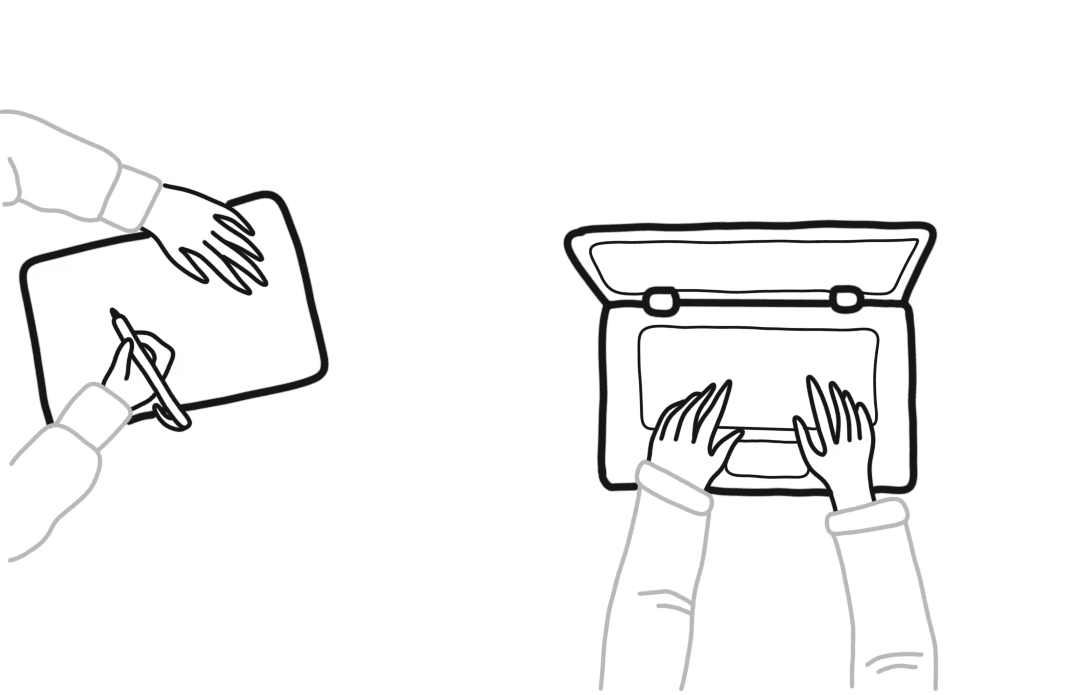
Not every project calls for pair design, and working alone has its place too. But I've reached for this technique in a few recurring situations:
When joining something new. When I joined Kenlo, my first assignment was to redesign the service area of their CRM — a complex, interconnected platform that no one had fully mapped. Our design lead Wilson Fao suggested pair design as part of my onboarding, and I was paired with designer Valdir Primo, who had deeper context on the product. The collaboration was so effective — compressing what could have been weeks of onboarding into days — that I later proposed it become a standard practice for all new designers joining the team. It did.
When stuck. Sometimes the ideation phase stretches on without resolution. Bringing in another designer with no prior attachment to the problem can break the deadlock quickly — not because they have the answer, but because a different perspective reframes the question. A fresh set of eyes often catches things that familiarity obscures. I've seen this kind of blindness happen too often, including in my own work.
When there's a skill gap. Some projects call for expertise the responsible designer doesn't have. A UX designer pairing with a visual designer, a researcher, or even a writer can produce something neither would have reached alone.
When speed matters. Real-time feedback accelerates everything. Instead of designing, sharing, waiting, revising — you're doing all of that simultaneously.
Not every project calls for pair design, and working alone has its place too. But I've reached for this technique in a few recurring situations:
When joining something new. When I joined Kenlo, my first assignment was to redesign the service area of their CRM — a complex, interconnected platform that no one had fully mapped. Our design lead Wilson Fao suggested pair design as part of my onboarding, and I was paired with designer Valdir Primo, who had deeper context on the product. The collaboration was so effective — compressing what could have been weeks of onboarding into days — that I later proposed it become a standard practice for all new designers joining the team. It did.
When stuck. Sometimes the ideation phase stretches on without resolution. Bringing in another designer with no prior attachment to the problem can break the deadlock quickly — not because they have the answer, but because a different perspective reframes the question. A fresh set of eyes often catches things that familiarity obscures. I've seen this kind of blindness happen too often, including in my own work.
When there's a skill gap. Some projects call for expertise the responsible designer doesn't have. A UX designer pairing with a visual designer, a researcher, or even a writer can produce something neither would have reached alone.
When speed matters. Real-time feedback accelerates everything. Instead of designing, sharing, waiting, revising — you're doing all of that simultaneously.
It's also just better for people
It's also just better for people
This might sound secondary, but it isn't: pair design makes the work more enjoyable. In an industry where isolation and burnout are common, spending time creating alongside a colleague — sharing ideas without filters, building on each other's thinking — is genuinely energizing. The sessions tend to be some of the most creatively alive moments in a project.
This might sound secondary, but it isn't: pair design makes the work more enjoyable. In an industry where isolation and burnout are common, spending time creating alongside a colleague — sharing ideas without filters, building on each other's thinking — is genuinely energizing. The sessions tend to be some of the most creatively alive moments in a project.
Try it once
Try it once
Start with one project, one colleague, one session. Let the results speak. Because what comes out of a good pair design session rarely looks like what either person would have made alone — and in a field where the quality of thinking matters as much as the quality of execution, that difference is worth making room for.
Start with one project, one colleague, one session. Let the results speak. Because what comes out of a good pair design session rarely looks like what either person would have made alone — and in a field where the quality of thinking matters as much as the quality of execution, that difference is worth making room for.