Discovering how 40,000 agents really work
Discovering how 40,000 agents really work
Discovering how 40,000 agents really work
Kenlo· Product Designer · 2022
Research & Discovery
Product strategy
Data synthesis
Workshops
B2B
SaaS
A CRM used by 8,500+ agencies had no map of itself
A CRM used by 8,500+ agencies had no map of itself
Kenlo is a CRM that sits at the center of Brazil's real estate market — 8,500+ agencies, 950 cities, R$40 billion in annual property transactions. When I joined, I was tasked with redesigning the Service Area: the part of the CRM where agents manage every interaction with a lead, from first contact to signed contract. The thing is, nobody had a clear vision of what should change; it was only a consensus that it was outdated.
As I started digging in, it became clear the platform was far more tangled than it appeared. Features were deeply interconnected with no clear map, and no one had a complete picture of how agents actually worked in the field.
So instead of jumping to solutions, I pushed to start with a structured discovery.
Kenlo is a CRM that sits at the center of Brazil's real estate market — 8,500+ agencies, 950 cities, R$40 billion in annual property transactions. When I joined, I was tasked with redesigning the Service Area: the part of the CRM where agents manage every interaction with a lead, from first contact to signed contract. The thing is, nobody had a clear vision of what should change; it was only a consensus that it was outdated.
As I started digging in, it became clear the platform was far more tangled than it appeared. Features were deeply interconnected with no clear map, and no one had a complete picture of how agents actually worked in the field.
So instead of jumping to solutions, I pushed to start with a structured discovery.
First step: build the map that didn't exist
First step: build the map that didn't exist
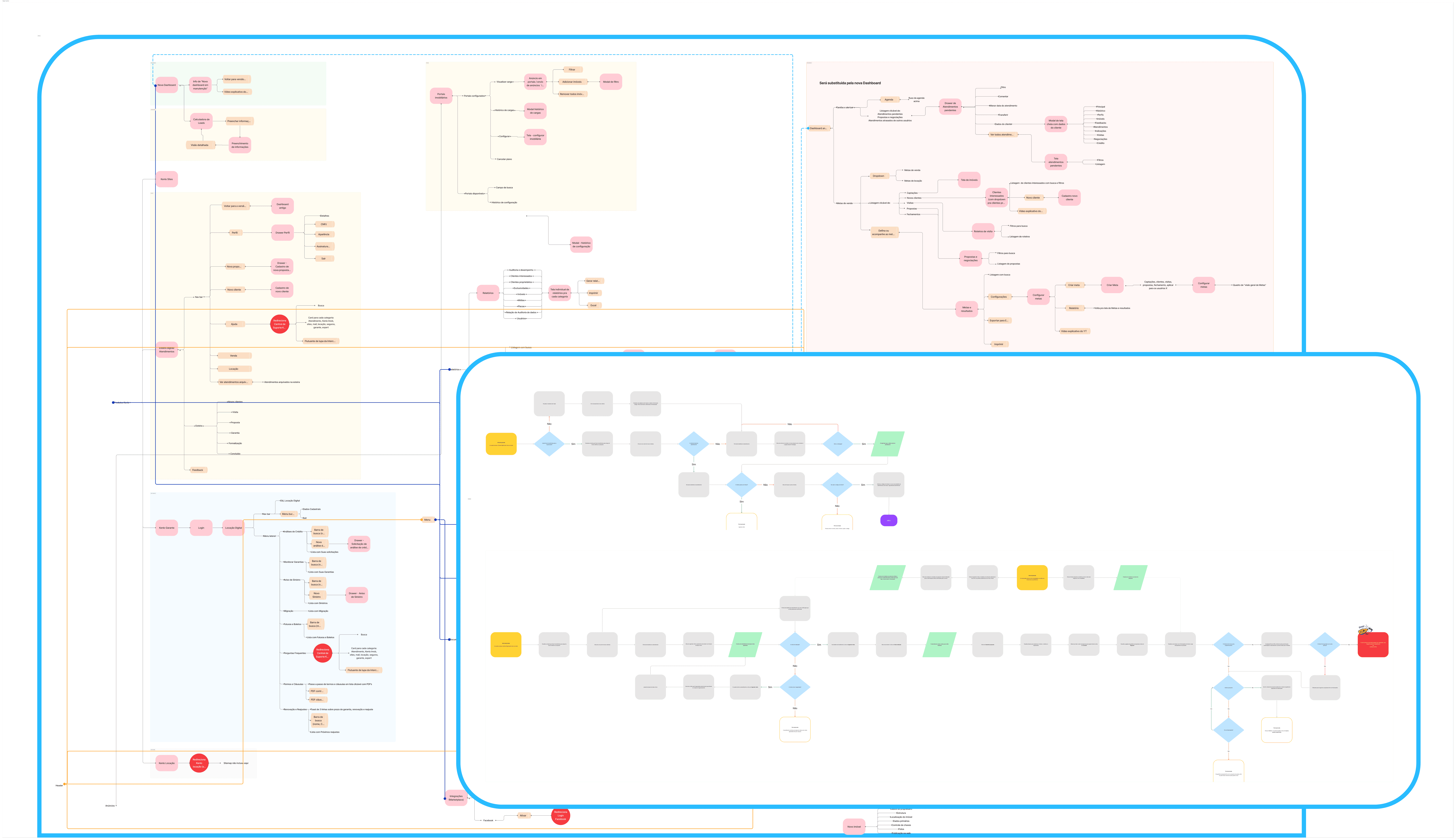
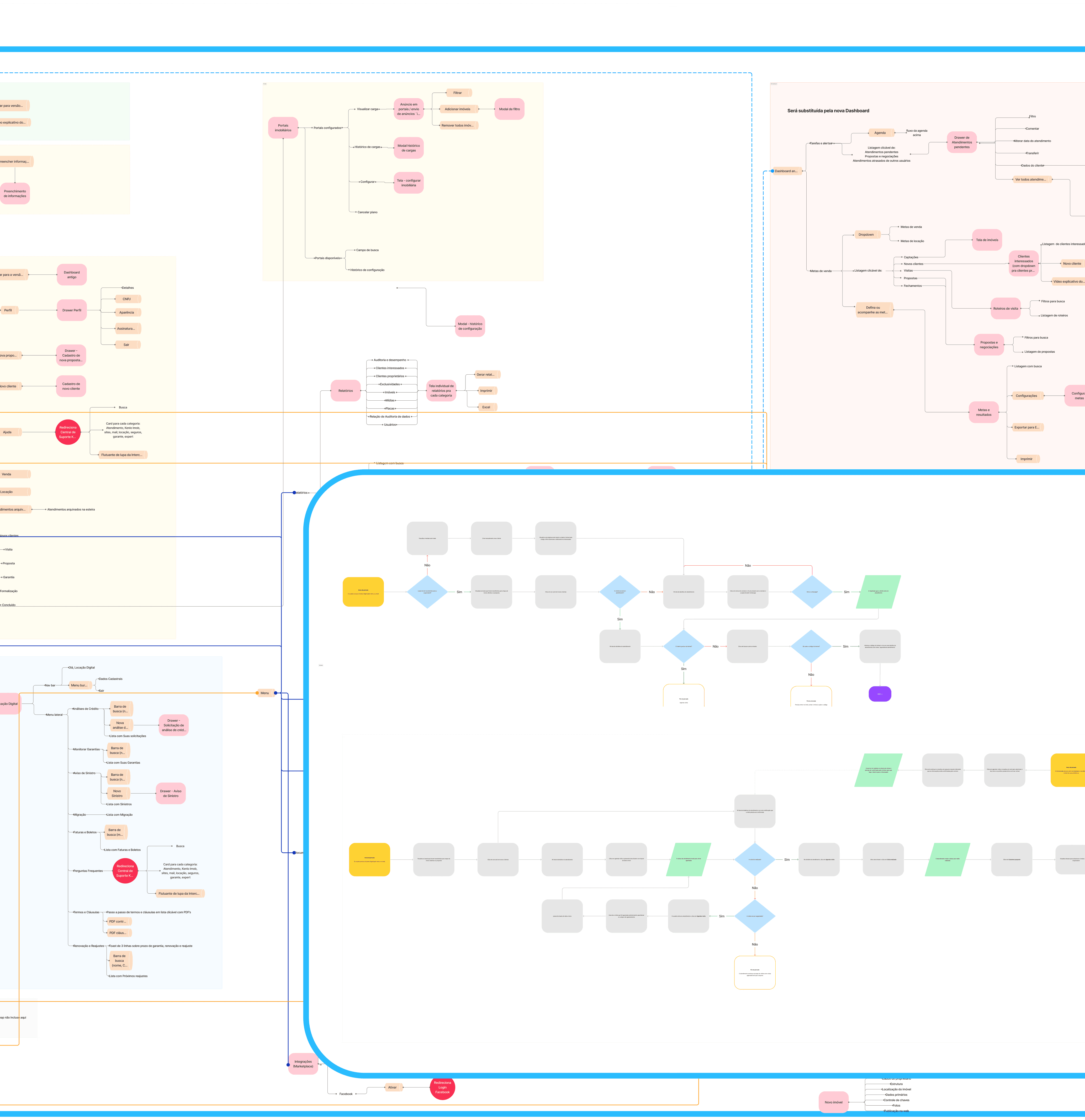
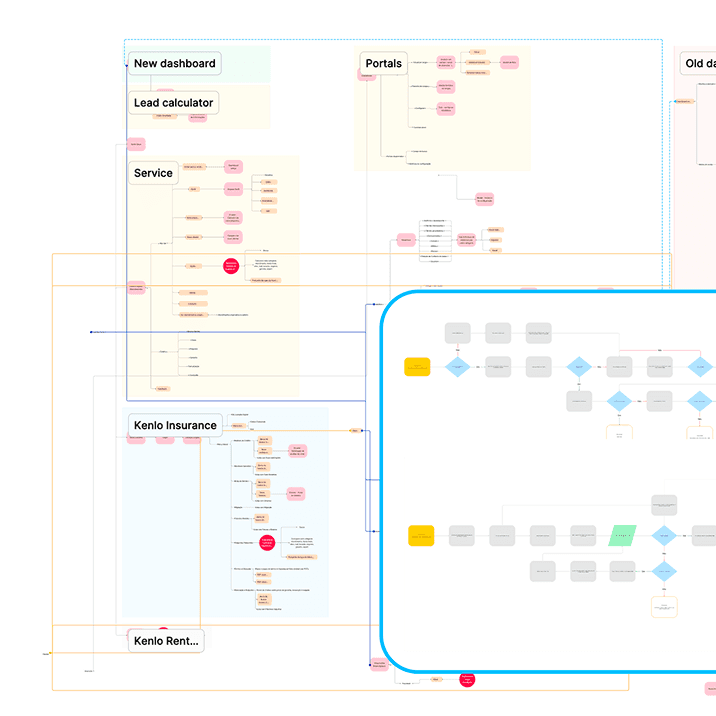
I created a full sitemap of the platform, documenting every feature and its dependencies. This wasn't just groundwork for my project — it surfaced improvement opportunities across the entire product that became useful reference points for other teams.
From there, I paired with designer Valdir Primo to map the user flow of the lead management area in detail, making sure we weren't missing blind spots the sitemap alone couldn't reveal.
I created a full sitemap of the platform, documenting every feature and its dependencies. This wasn't just groundwork for my project — it surfaced improvement opportunities across the entire product that became useful reference points for other teams.
From there, I paired with designer Valdir Primo to map the user flow of the lead management area in detail, making sure we weren't missing blind spots the sitemap alone couldn't reveal.
Sitemap & user flow
Sitemap & user flow
Understanding what we don't know (yet)
Understanding what we don't know (yet)
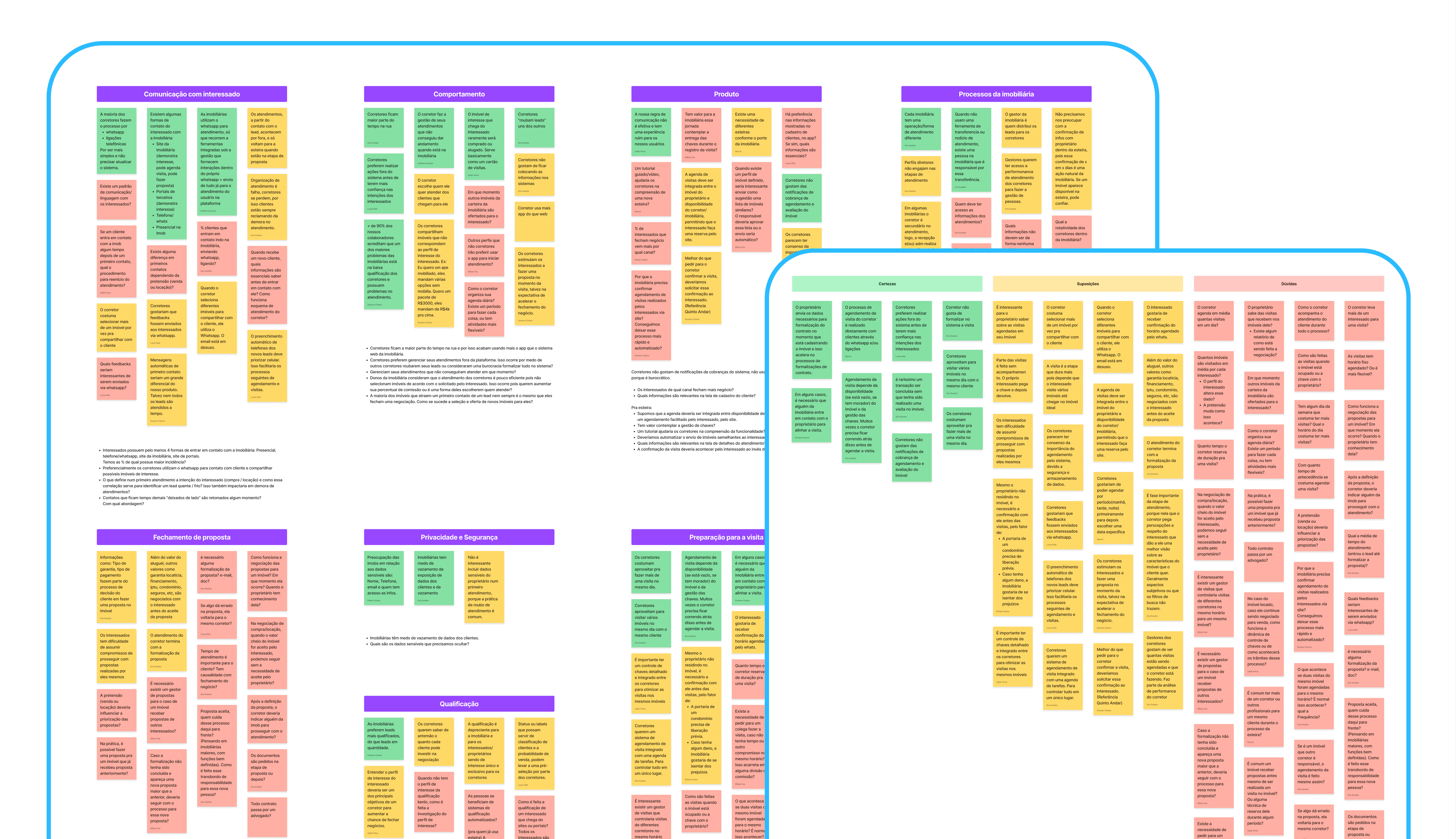
Before talking to users, I ran a CSD Matrix workshop — Certainties, Suppositions and Doubts — with leaders, managers and designers. The goal was to surface all the assumptions the team was holding about how agents worked, and turn our disagreements and unknowns into a focused research agenda, so we could ask users the right questions.
We then organized the matrix into an affinity map, grouping insights around the key moments of an agent's journey: initial contact, property visits, proposal negotiations, and contract closure.
Before talking to users, I ran a CSD Matrix workshop — Certainties, Suppositions and Doubts — with leaders, managers and designers. The goal was to surface all the assumptions the team was holding about how agents worked, and turn our disagreements and unknowns into a focused research agenda, so we could ask users the right questions.
We then organized the matrix into an affinity map, grouping insights around the key moments of an agent's journey: initial contact, property visits, proposal negotiations, and contract closure.
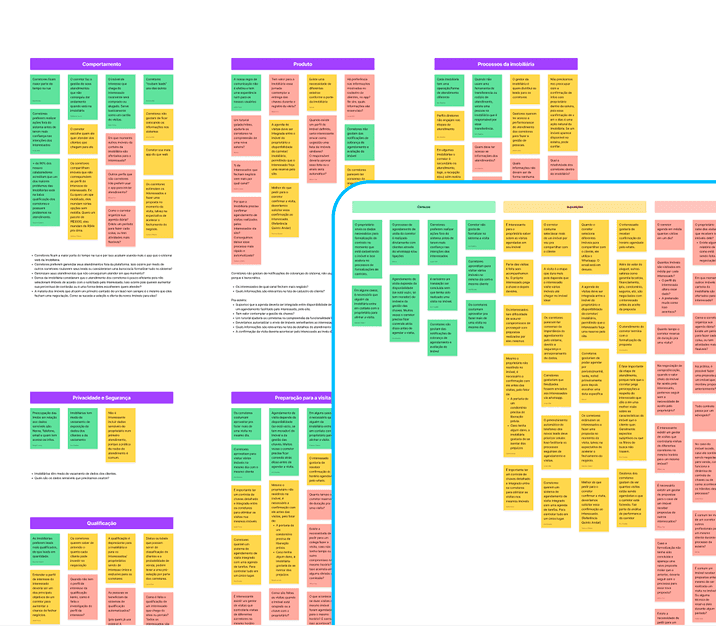
CSD matrix & affinity map
CSD matrix & affinity map
Three insights that changed the product direction
Three insights that changed the product direction
Together with researcher Lucas Sfair, we recruited real estate managers and agents from agencies representative of Kenlo's customer base across Brazil.
Over two weeks of qualitative interviews, we set out to understand: who does what, when, how long each stage takes, what breaks down, and how agents actually use — or work around — the platform.
The findings reshaped how we thought about the product:
Together with researcher Lucas Sfair, we recruited real estate managers and agents from agencies representative of Kenlo's customer base across Brazil.
Over two weeks of qualitative interviews, we set out to understand: who does what, when, how long each stage takes, what breaks down, and how agents actually use — or work around — the platform.
The findings reshaped how we thought about the product:
1.
1.
Agents live in the field, not at a desk.
Agents live in the field, not at a desk.
Most of their working time is spent outside the office — meaning the mobile experience needed to be the primary focus, not an afterthought of the web version.
Most of their working time is spent outside the office — meaning the mobile experience needed to be the primary focus, not an afterthought of the web version.
2.
2.
Agents want quality leads, not more leads.
Agents want quality leads, not more leads.
The volume-first approach baked into the CRM was misaligned with how agents actually prioritized their time.
The volume-first approach baked into the CRM was misaligned with how agents actually prioritized their time.
3.
3.
Client conversations happen outside the CRM.
Client conversations happen outside the CRM.
Agents were managing leads in Kenlo but communicating with clients on WhatsApp, creating a constant context switch.
Agents were managing leads in Kenlo but communicating with clients on WhatsApp, creating a constant context switch.
This research became a full roadmap for the next quarter
This research became a full roadmap for the next quarter
We brought the full synthesis to the product team, leadership, and top management — not as a report to be filed away, but as a working session. Through collaborative prioritization, we mapped opportunities against impact and effort, and landed on a plan:
We brought the full synthesis to the product team, leadership, and top management — not as a report to be filed away, but as a working session. Through collaborative prioritization, we mapped opportunities against impact and effort, and landed on a plan:
1.
1.
1.
Service Kanban redesign — give agents one place to know everything about a lead and act on it. Multiple properties per lead, full activity history, and a mobile-first approach so the information is always at hand — whether they're at their desk or heading to a property visit.
Service Kanban redesign — give agents one place to know everything about a lead and act on it. Multiple properties per lead, full activity history, and a mobile-first approach so the information is always at hand — whether they're at their desk or heading to a property visit.
2.
2.
2.
Lead Qualifier — a new feature to help agents prioritize leads by quality, not just quantity. Using data already living in Kenlo's ecosystem — cross-agency contact history, portal browsing behavior, property type preferences, and time spent on listings — we could calculate the probability of a lead actually converting. Since the majority of Brazilian agencies use Kenlo, and Kenlo also operates an integrated property portal, we had a uniquely powerful data foundation to build this on.
Lead Qualifier — a new feature to help agents prioritize leads by quality, not just quantity. Using data already living in Kenlo's ecosystem — cross-agency contact history, portal browsing behavior, property type preferences, and time spent on listings — we could calculate the probability of a lead actually converting. Since the majority of Brazilian agencies use Kenlo, and Kenlo also operates an integrated property portal, we had a uniquely powerful data foundation to build this on.
3.
3.
3.
Seamless external integrations — agents already relied on Google Calendar and WhatsApp to schedule visits and talk to clients. Instead of fighting existing habits, we leaned into them: deep integration with both tools, so the Kanban became the central hub without asking agents to change how they work.
Seamless external integrations — agents already relied on Google Calendar and WhatsApp to schedule visits and talk to clients. Instead of fighting existing habits, we leaned into them: deep integration with both tools, so the Kanban became the central hub without asking agents to change how they work.
Further down the roadmap: improvements to proposal management and addressing different user profiles beyond realtors — both identified as valuable, but lower priority.
Further down the roadmap: improvements to proposal management and addressing different user profiles beyond realtors — both identified as valuable, but lower priority.
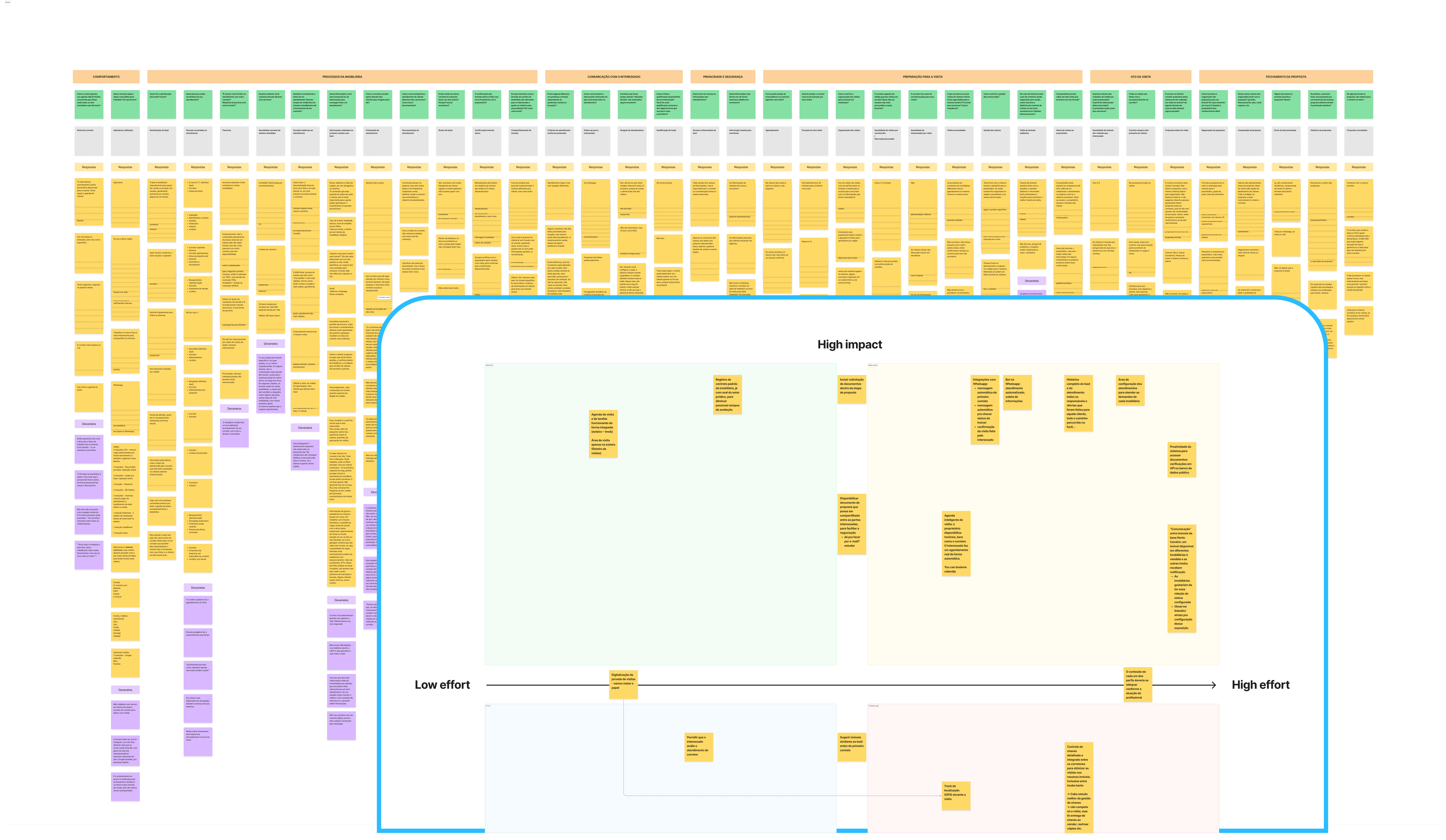
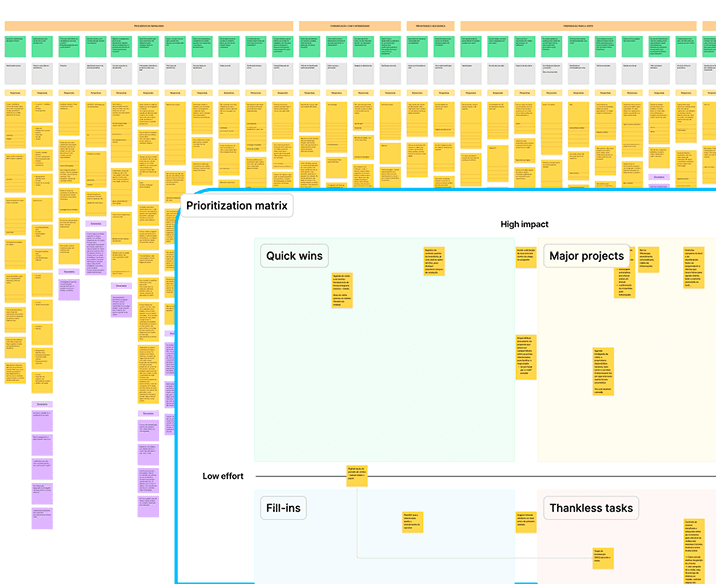
Interview synthesis & impact vs. effort matrix
Interview synthesis & impact vs. effort matrix
Two shipped features. One discovery process that made them possible.
Two shipped features. One discovery process that made them possible.
The Kanban redesign was delivered by end of 2022. Agents could now track multiple properties per lead, see a full activity history, and access everything they needed from their phone. It was received with strong positive feedback and became one of the most actively maintained areas of the product, continuously iterated on based on ongoing user input.
The Lead Qualifier took longer to ship — not because of design complexity, but because the core challenge was an engineering one: how to build the scoring model reliably using data spread across the CRM and portal. Once developed and tested, it was integrated directly into every client card on the Kanban, giving agents a qualification signal right at the moment they needed it most.
Both features traced directly back to research that started with a simple question: how do real estate agents actually work? The answers reshaped how the team thought about the product — and kept informing decisions long after the discovery was done.
The Kanban redesign was delivered by end of 2022. Agents could now track multiple properties per lead, see a full activity history, and access everything they needed from their phone. It was received with strong positive feedback and became one of the most actively maintained areas of the product, continuously iterated on based on ongoing user input.
The Lead Qualifier took longer to ship — not because of design complexity, but because the core challenge was an engineering one: how to build the scoring model reliably using data spread across the CRM and portal. Once developed and tested, it was integrated directly into every client card on the Kanban, giving agents a qualification signal right at the moment they needed it most.
Both features traced directly back to research that started with a simple question: how do real estate agents actually work? The answers reshaped how the team thought about the product — and kept informing decisions long after the discovery was done.
Deep discovery isn't always the right call,
Deep discovery isn't always the right call,
But when the problem space is genuinely unclear, investing in understanding before designing is what separates work that ships and sticks from work that misses the mark. This project is proof of that: two features shipped directly out of the discovery, a product roadmap built on real user behaviour, and insights that stayed relevant well beyond the research itself — all because we asked questions before opening Figma.
But when the problem space is genuinely unclear, investing in understanding before designing is what separates work that ships and sticks from work that misses the mark. This project is proof of that: two features shipped directly out of the discovery, a product roadmap built on real user behaviour, and insights that stayed relevant well beyond the research itself — all because we asked questions before opening Figma.